 WOVEN PLATEAU
Reading the Rug: A Guide to Tibetan Motifs
Tibetan carpets are not merely decorative. Their patterns form a visual language — a way of expressing wishes for peace, abundance, longevity, and spiritual well-being. To read a Tibetan carpet is to read a language of symbols that has been spoken across the Silk Road for centuries.
June 2026 · 5 min read
Dragon: The Celestial Guardian
The dragon is perhaps the most dramatic and immediately recognizable motif in Tibetan carpet design. In Tibetan Buddhist culture, the dragon is not a fearsome beast but a celestial being — a symbol of power, protection, and the sky realm itself. Dragons on temple runners and khaden are rendered with rhythmic, flowing lines that suggest movement and vitality. They grip jewels or flaming pearls in their claws, symbols of wisdom and wish-fulfillment.
A carpet with a dragon motif is not merely decorated — it is guarded. The dragon is woven as a protective presence, whether in a monastery assembly hall or a family living space.
Phoenix: Grace and Harmony
Often paired with the dragon, the phoenix — adapted from Chinese Fenghuang imagery — represents grace, peace, and the harmonious union of opposites. Where the dragon embodies yang (active, masculine energy), the phoenix embodies yin (receptive, feminine grace). Together, they represent cosmic balance — a wish for harmony in the household.
Lotus: The Flower of Enlightenment
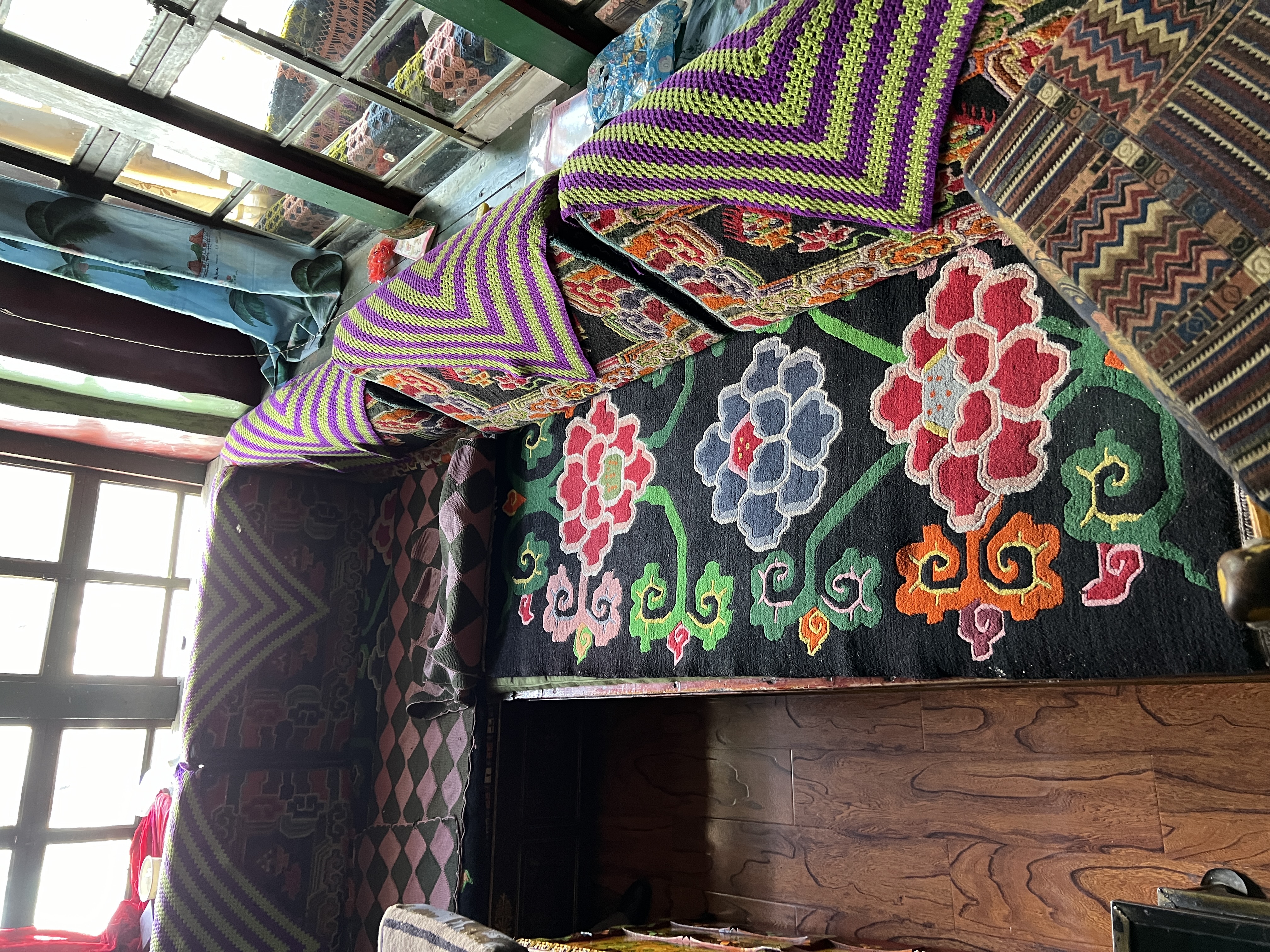
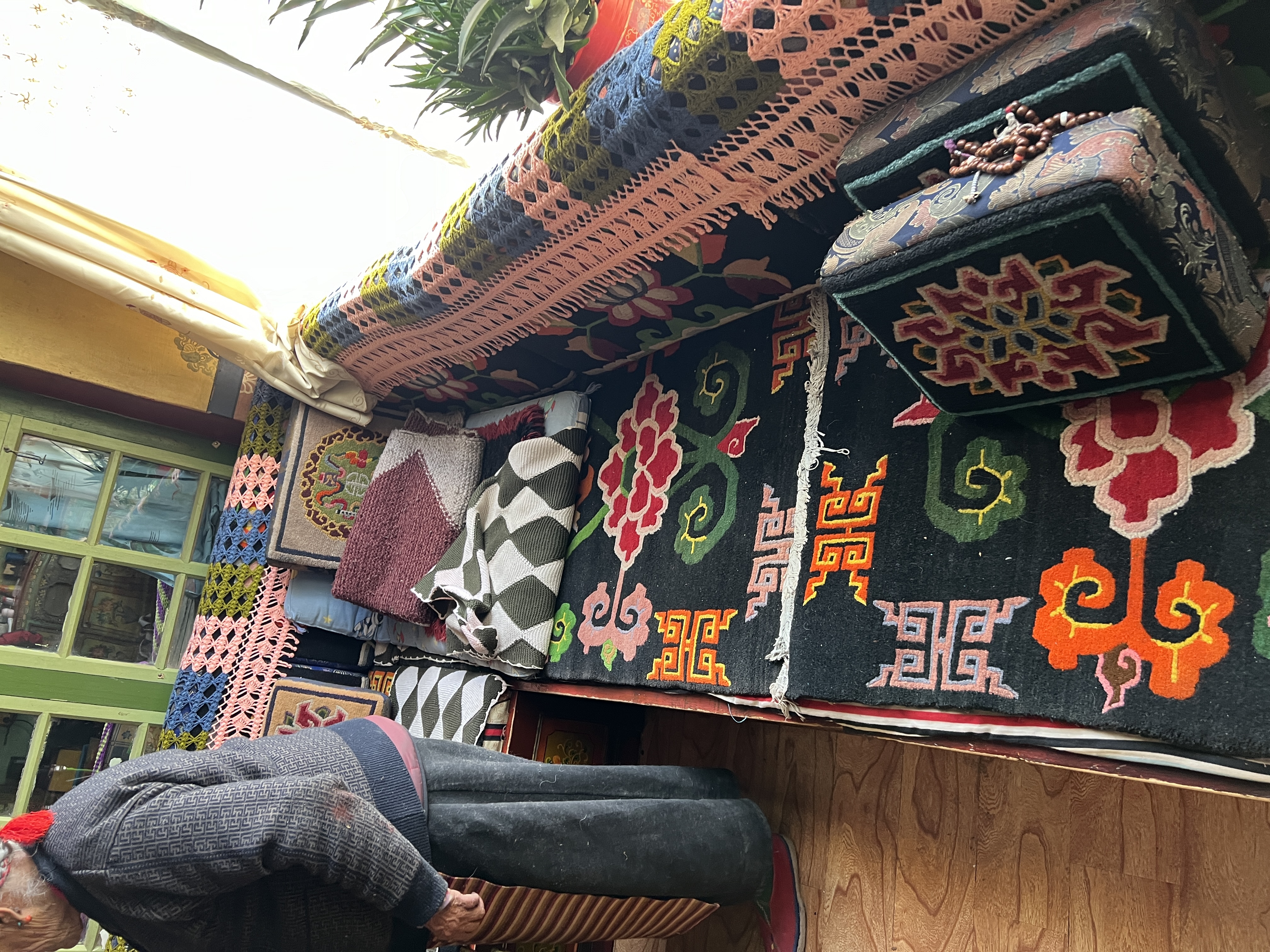
The lotus holds profound meaning across Buddhist cultures. Rooted in the mud of material existence, it grows through water to bloom pristine above the surface — a metaphor for the spiritual journey from ignorance to enlightenment. In Tibetan carpets, lotuses appear as medallions, border patterns, or central compositional elements.
Tiger: Fearlessness and Spiritual Achievement
The tiger is an ancient motif in Tibetan and Central Asian art, predating Buddhism on the plateau. In Tibetan tradition, the tiger represents fearlessness and spiritual achievement — the ability to move through the world without being consumed by fear or attachment. Tiger stripe patterns on saddle rugs were believed to protect both horse and rider on dangerous mountain journeys.
Cloud Motifs: Wishes Fulfilled
Stylized cloud motifs — often adapted from the Chinese ruyi scepter form — represent wish fulfillment and prosperity. They float through the composition like blessings, connecting the various symbolic elements. Clouds are rarely the main subject of a carpet but are essential to its visual rhythm, creating the sense of a world in which dragons, phoenixes, and flowers inhabit a shared, blessed space.
Reading Beyond the Individual Symbol
The meaning of a Tibetan carpet is not simply the sum of its individual symbols. It is in the relationship between them — the way a dragon curls around a lotus, the way clouds frame a central medallion, the way borders create protected space. The composition as a whole expresses a worldview: ordered, balanced, meaningful, and infused with wishes for a good life.