 WOVEN PLATEAU
The Source
Highland Wool & Natural Dyes
Every Tibetan carpet begins long before the loom — in the high-altitude grasslands where sheep grow a wool unlike any other, and in the dye pots where plants, roots, and minerals yield colors that synthetic chemistry cannot replicate.
Highland Wool: Born of Altitude
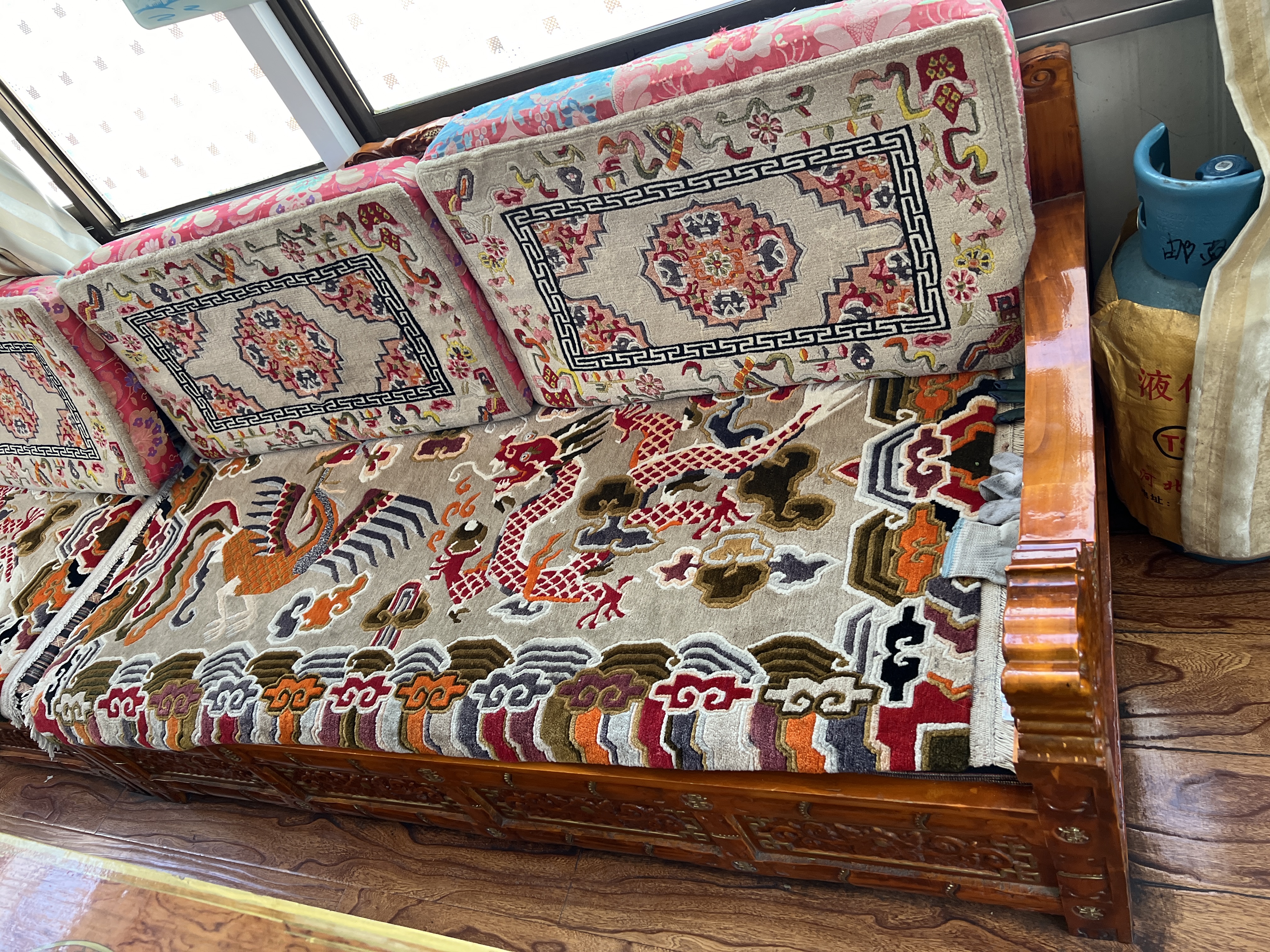
The wool used in Tibetan carpets comes from sheep that graze at elevations above 4,000 meters on the Tibetan plateau. In this harsh environment — cold, windy, with intense UV exposure — the sheep grow a fleece that is fundamentally different from lowland wool. The fibers are longer, coarser, and more resilient. They have a natural crimp that gives the yarn spring and bounce, and a lanolin content that imparts a subtle sheen and water resistance.
Historically, different sources of wool had different uses. Wool from higher-altitude sheep — longer, stronger, and more durable — was preferred for carpets that would see heavy use in homes and monasteries. Finer wool from lower-altitude sheep was used for clothing and delicate textiles. The weaver's knowledge of wool grades was as important as their skill at the loom.
Hand-Spinning: The First Transformation
After shearing, the wool is washed, carded, and hand-spun into yarn. Hand-spinning — traditionally done by women in highland communities — gives the yarn a subtle irregularity that is prized in Tibetan carpets. Slight variations in thickness create a living surface texture that machine-spun yarn, with its mechanical uniformity, can never achieve.
The spinning is often done with a simple drop spindle, a tool that has been used on the plateau for millennia. The spinner's hands control the twist and tension, producing yarn that carries the rhythm of the human body — not the drone of a machine.
Natural Dyes: Colors from the Earth
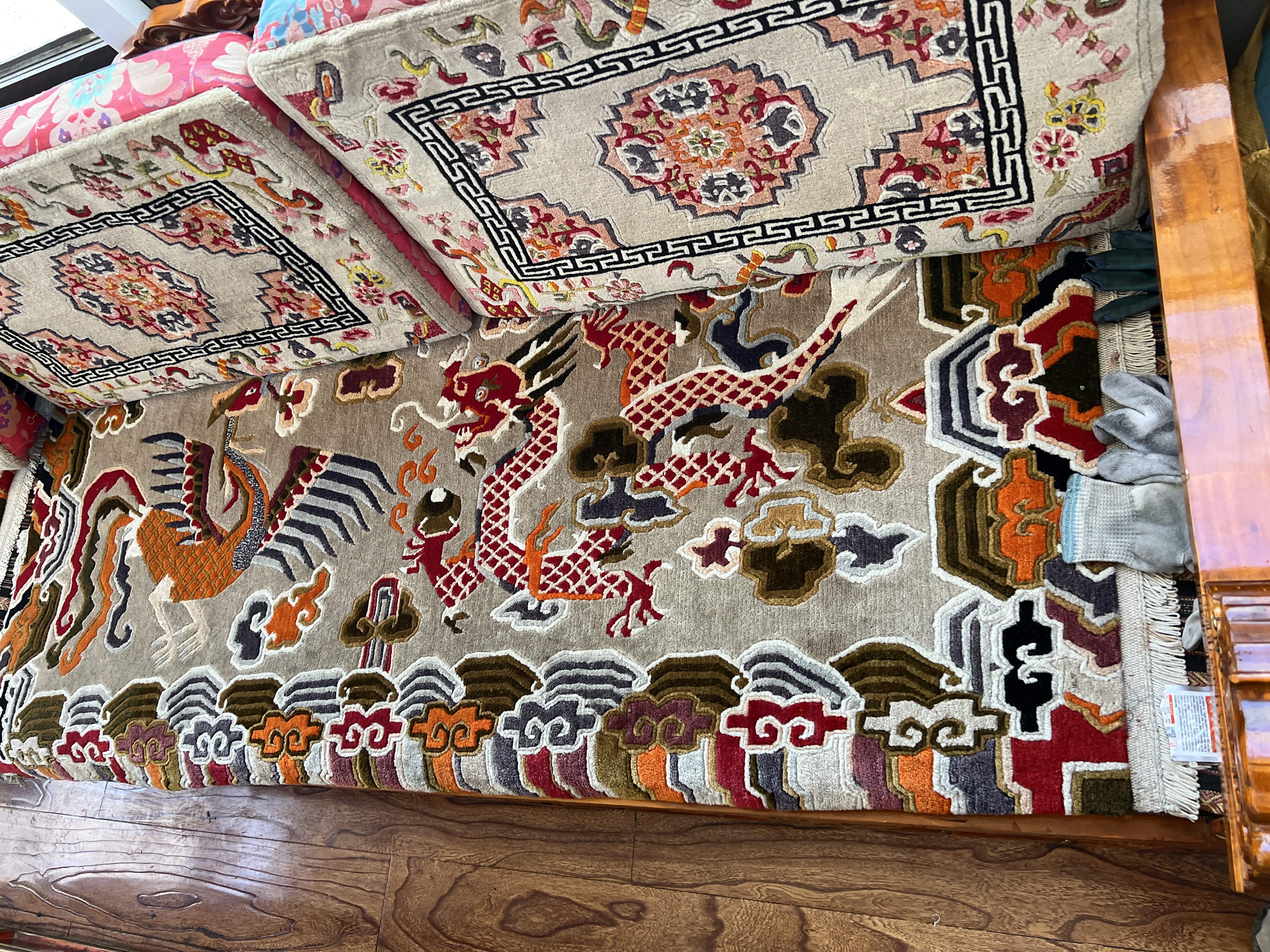
Traditional Tibetan carpets are dyed using natural sources — plants, roots, bark, minerals, and sometimes insects. Each dye requires its own process: some need mordants to fix the color to the wool, others require multiple dipping cycles to achieve the desired depth. The dyer's knowledge is a form of alchemy, balancing temperature, time, concentration, and water chemistry.
The palette is distinctly organic. Madder root yields crimsons and corals from soft pink to deep red. Indigo — steeped and fermented over weeks — produces blues that range from pale sky to midnight. Walnut hulls give warm browns. Local plants and minerals contribute golds, sage greens, and muted yellows. These colors do not shout; they breathe. Over time, they mellow rather than fade, developing a patina that synthetic dyes can never replicate.
The Living Quality of Natural Color
One of the most important characteristics of natural dyes is their variation. No two dye batches are exactly the same. The madder harvested in one season may yield a slightly warmer crimson than the next. The indigo vat, alive with fermentation, responds to temperature and humidity. This variability is not a flaw — it is the signature of a living material, and it gives each carpet a color character that is genuinely one of a kind.