 WOVEN PLATEAU
The Language
A Visual Language of Wishes
Tibetan carpets are not simply decorative. Their patterns form a visual language — a way of expressing wishes for peace, abundance, longevity, and spiritual well-being. Every dragon, lotus, and cloud carries meaning accumulated over centuries of cultural exchange across the Silk Road.
Dragon: Power and Protection
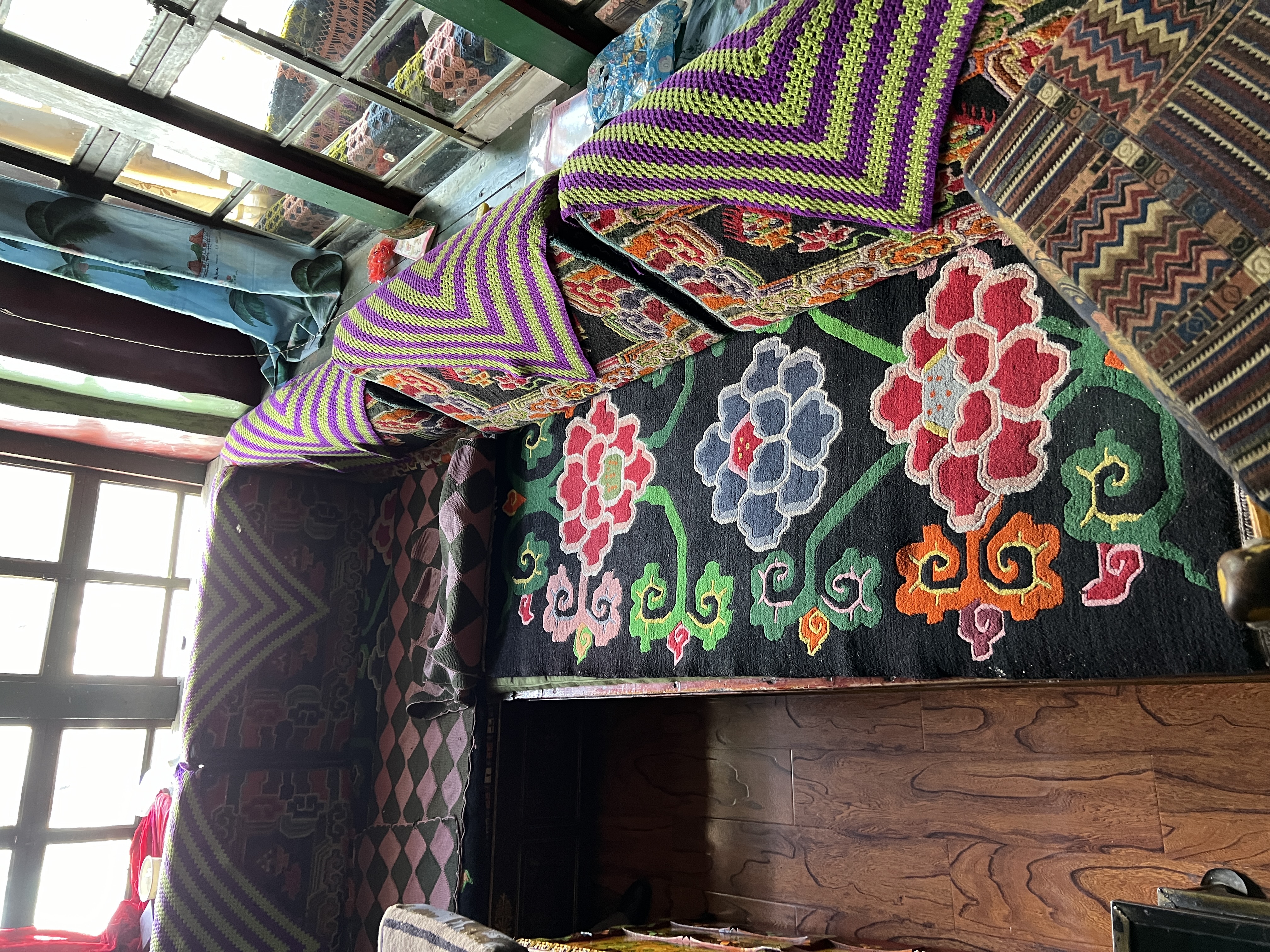
The dragon is perhaps the most dramatic motif in Tibetan carpet design. In Tibetan Buddhist culture, the dragon does not carry the fearsome connotations it may have in the West — it is a celestial being, a symbol of power, protection, and the sky realm. Dragons on temple runners and khaden are rendered with rhythmic, flowing lines that suggest movement and vitality. They are guardians of sacred space, woven to protect the sitter or the space itself.
Phoenix: Grace and Renewal
The phoenix — Fenghuang in Chinese, adapted into Tibetan visual culture via Silk Road exchange — represents grace, renewal, and the harmonious union of opposites. Often paired with the dragon, the phoenix embodies the feminine principle, balancing the dragon's masculine energy. In Tibetan textiles, phoenixes appear floating among clouds, their flowing tail feathers echoing the curves of auspicious cloud motifs.
Lotus: Enlightenment Rising
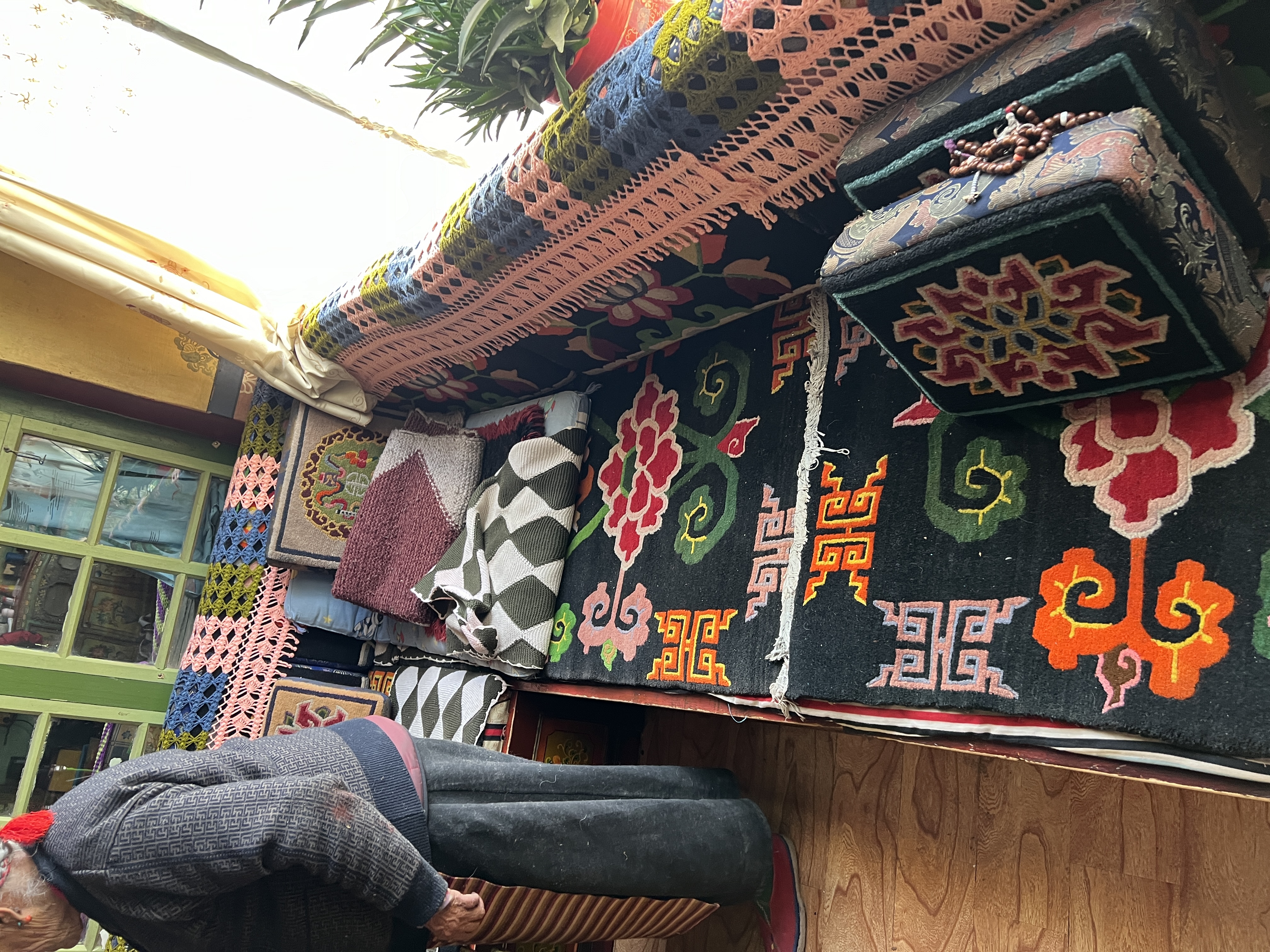
The lotus holds profound meaning across Buddhist cultures. Rooted in mud, it grows through water to bloom pristine above the surface — a metaphor for the spiritual journey from ignorance to enlightenment. In Tibetan homes and monasteries, lotus motifs appear on carpets as medallions, border patterns, or central designs. They are not merely decorative; they are reminders of aspiration.
Borders and Frameworks
Most Tibetan carpets feature elaborate borders — sometimes three or more concentric frames surrounding the central field. These borders are not merely decorative; they create a defined, protected space. The meander pattern (Greek key), known in Tibetan tradition as the "Chinese wall," is especially common, often rendered with three-dimensional shading that gives the border depth and presence.
The border frames the carpet's central message, much as a temple wall frames a sacred space. It says: within this boundary, something important happens — rest, conversation, contemplation, or simply the quiet presence of daily life.
A Language Anyone Can Read
What makes Tibetan carpet patterns remarkable is their accessibility. Unlike some religious art that requires specialized knowledge to interpret, carpet patterns are relatively direct. A flower is a flower — a wish for beauty and abundance. A dragon signals protection. A lotus speaks of purity. The patterns are sophisticated but not obscure, making them a visual language that can be appreciated across cultures.